Tuesday, March 29, 2022

Cousin Connections

In my genealogical research of recent months I have focused my attention on ancestor Matthew Gower (1762-1853), one of the earliest Gowers of whom we have any record. Matthew was the GGGreat Grandfather of my Grandfather Leroy Ertin Gower (1899-1974). Or to come at it from the other direction, Matthew was the GGreat Grandson of Abell Gower, the first Gower ancestor to come to America from England.

Two recently discovered Gower cousins have helped focus my attention on ancestor Matthew Gower. One cousin is Marsha Fagnani of Calaveras County, California. She, like me, is a direct descendant of Matthew Gower. She leads a Facebook Group called Friends of Gower Cemetery (the Cemetery where ancestor Matthew Gower is buried). Their stated purpose is "to preserve and maintain the pioneer family Gower Cemetery, established in 1816, located behind the Centenary United Methodist Church on Gower Road, Nashville, Tennessee." I encourage you to visit their Facebook page to find out all about the work of cousin Marsha and other Gower descendants. Their efforts are well worth our support and encouragement. On their Facebook page are several resources related to the Gower Cemetery and our Gower ancestry. Among those resources is a list all the known Gowers that reside in the Cemetery.

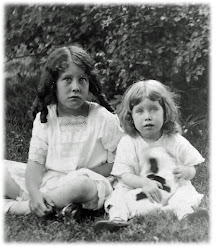
Unknown Children from Oklahoma
in the 1920s
Another Gower cousin I was fortunate enough to find and connect with recently is Edwina Gower from Arkansas. Cousin Edwina, another direct descendant of  Matthew Gower, has a special interest in Matthew and has collaborated with several of us in an effort to share information and learn more about this important ancestor. The rewarding work of discovering more about Matthew Gower and other Gower ancestors continues.


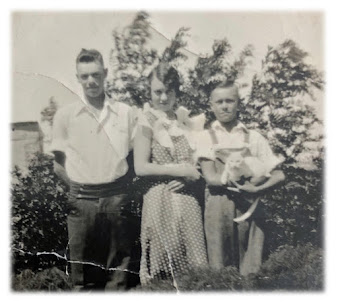
More Old Family Photos. As I mentioned in my last post, I was unexpectedly gifted dozens of old family photos by second cousin Norman Getz of Beaver, Oklahoma who passed away earlier this year. On the right is one of the photos of two unknown children, probably from the 1920s. Some of the photos I received are from the 1920s and 1930s and show people I know and can identify. Many of the photos however are images of people I cannot identify. 

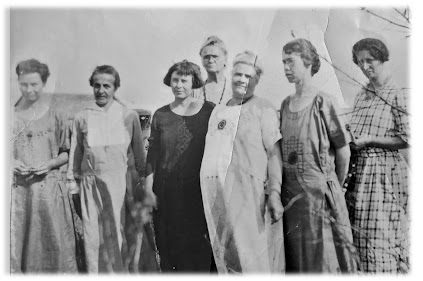
Elvira Owens Shepard (center left) with 
other friends, family, neighbors
The photographs I have received are good quality for the most part and are quite remarkable really. The problem is that they show family or friends who are unknown to me. In this post I have included a few more of these images. If you recognize these folks please let me know. If you don't know these folks, just admire and ponder these compelling historic images from a couple of generations ago. 

One of the people who figured prominently in the life of our family in the early part of the 20th Century was my Great Grandmother Elvira Owens Shepard Williams. She appears repeatedly in the photos that we have from that era. The group photo above on the left shows 6 folks, a few of whom I can identify. The lady on the right is Mrs. Erickson, a family friend and neighbor who appears in a surprisingly number of our old photos. Next to Mrs. Erickson, in the hat, is Cal Williams who is seated next to Great Grandmother Elvira Owens Shepard. As an older widow, Elvira married Cal Williams who was considerably younger than her. The lady on the left and the two children in the back I cannot identify. Can you?

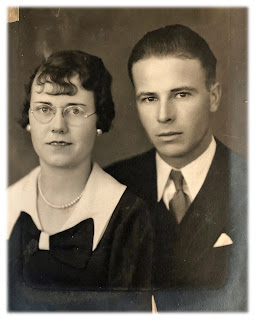
This next picture is a better image of Elvira Owens Shepard (1865-1931) and her late-in-life husband, the young and dapper Cal Williams (1882-1968). Select this link for more about Elvira and Cal and the controversy their marriage created nearly 100 years ago. 

 
The final picture below is a compelling picture of an attractive young family posing formally yet gracefully in a setting and posture reminiscent of a number of old family photos I have seen. I recognize the wicker chair which is a type of chair I have seen in other old family photos, but I do not know who this family is. Do any of you know?
    

I continue to sort through the many pictures I have received. In future posts I look forward to sharing with you more of the best of them. The goal of identifying all the people in these pictures for future generations is an important one. Your help would be greatly appreciated.
- - -
Steve Shepard

Monday, February 28, 2022

Tell Me Who I Am


Pauline and Bill Russell
probably in the 1930s
I received word recently that my second cousin Norman Getz (1936-2022) of Beaver County, Oklahoma passed away a few weeks ago. Norman was one of the 36 first cousins of my father Eugene Shepard. Among Norman's belongings were dozens of old family pictures which were given to Lisa Parks, my second cousin who lives in Fort Worth. Lisa was gracious enough to forward them on to me. 

The photos are a treasure trove of images from our family's history in the early years of the 20th century. Most of them are unidentified, although some have writing on the back which tells something about the people in the photos. But as with many old photos I have seen, the words on the back don't help much. They include phrases like, "this is mother," or "this was taken after we left Oklahoma," or "this was taken last summer." 

One picture that jumped out at me when I saw it, was a picture I had never seen before. It shows my aunt Pauline Shepard Russell (1916-2000) and my uncle Bill Russell (1908-1997) when they were very young. It is a picture that may have been taken when they were married in January 1935 in Springfield, Colorado. I am grateful for all these pictures from our family's history, identified or not. 

Elmer, Pauline and Eugene Shepard
Tell Me Who I Am. I am hoping that you might be able to help me put names to the people in the pictures I have. Over the next couple of months I will share with you some of the pictures I have received, in hopes that some of you can tell me who these people are. 

This second picture, like the first one, may also be from the 1930s. On the back of this photo is written: "Aunt Sadie. Taken in the yard this summer." I doubt this is a picture of my Great Aunt Sadie Shepard Pruett (1892-1980). The two fellows in the picture look very much like my Uncle Elmer Shepard (1918-2012) on the left, and my father Eugene Shepard (1921-2003) on the right. The woman in the middle looks more like my Aunt Pauline Shepard than my Great Aunt Sadie Shepard Pruett. If you have some insight into these photos, I would appreciate hearing from you.

The third photo is a group picture and shows a collection of women in Oklahoma, probably in the late 1920s. The back of the photo lists the women in the picture: Sadie, Mrs. Bachman, Mrs. Esther Frass, Mrs. Erickson, Grandma, Bura, and Amelia Frass

A photo from the 1920s of several family members,
neighbors and friends
I am suggesting a date of the late 1920s for this photo because "Grandma" (Elvira Owens Shepard), the woman in the middle/right in white, died in 1931. Grandma Elvira Shepard appears in many of the photos that I have received. She seems to have been the matriarch of the Shepard family in the early 20th century in Oklahoma, which would explain why she is so prominent in many of the photos. Next to Elvira, on the right, is my Grandmother Bura Davis Shepard (1896-1986), Elvira's daughter-in-law.

In the back in this photograph is a tall woman who is identified as Mrs. Erickson. She appears in a number of the photos that I have received. She must have been a close family friend or neighbor. If anyone can tell me about Mrs. Erickson and her place in our family's history, I would appreciate hearing from you.

If you do have comments to make about these photos, send me an email, or simply click on the comments button at the bottom of this page and you can leave a message. I would be glad to hear from you.
- - -
Steve Shepard

Wednesday, February 02, 2022

An Infamous Weekend

Mine eyes have seen the glory
of the coming of the Lord:
His truth is marching on.
~Battle Hymn of the Republic

Happy Birthday to Cindy A. Shepard! Today, February 2 is a memorable day in our Shepard Family history. Not just because it is groundhog day. Nor because it is the exact midpoint of winter. Not even because it is the birthday of my sister-in-law Cindy A.Shepard of Oak Harbor, Washington. All that makes it plenty memorable, of course. But the second day of February stands out for us Shepards because of two historic events that occurred on the same day in the lives of some kinfolk. One event was very happy and the other very tragic. 

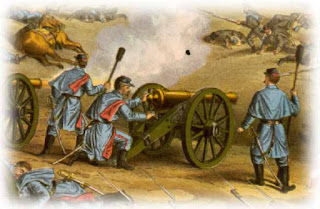
160 Years Ago Today. In February of 1862, my Great Great Grandfather William Sheppard was just a few months into his military service in the Civil War. He had joined the Union Army's 2nd Indiana Cavalry in September, 1861 while living in Wabash, Indiana. Over the following few months, after his military training, his unit marched southward from Indiana into Kentucky. At the town of Bowling Green, William's unit had their first taste of battle in a skirmish with confederate forces. 

It was the very first conflict of the War for the 2nd Indiana Cavalry. This unit went on to fight in the war for 3 more years. They fought at the famous encounter at Shiloh. They went on to engage the enemy in other venues as well before returning to Wabash, Indiana at the end of the war. 

But William's active duty in the Civil War began and ended at Bowling Green, Kentucky. On Sunday, February 2, 1862, William suffered a serious arm injury from a canon blast. We don't know if the canon misfired, or if William was hit by enemy fire. We only know that the injury brought an abrupt end to his active duty in the Civil War.

Tragic Irony. While on the battlefield that fateful day in February 1862, young William could not have known what was happening back home in Indiana. The very day he was injured in Kentucky, his wife Mary in Wabash, Indiana, was giving birth to their second son. What tragic irony that these two events would happen on the same day, some 315 miles apart.

After suffering his injury, William was taken off the battle field and transported to a military hospital in Evansville, Indiana. 5 long months later, on July 22, 1862 he died. The actual cause of death was not the arm injury, but dysentery, an intestinal infection that took the life of countless soldiers who, like GGGranddad William, experienced extended stays in wartime hospitals.

The second day of February will always remain in our family history as a time when joy and tragedy intersected. In Indiana a baby was born; in Kentucky the baby's father was mortally wounded. It may have been her longing for her soldier-husband that caused Mary Shepard to name their newborn child William Elmer Shepard. 

The Rest of the Story. That wartime baby William Elmer Shepard became a very important figure in our family history as a young adult. He left his troubled stepfamily in Indiana and journeyed alone to the Saint Louis area where he married, had two children, and then migrated with them to Oklahoma in the early years of the 20th century. Our ancestors suffered much in those tragic years of the Civil War. We are grateful for their fortitude and resilience, and are honored to be counted among their descendants.
- - -
Steve Shepard

Monday, January 17, 2022

The Lost 100th Grandchild

Which one of you,
having a hundred sheep
and losing one of them,
does not leave the ninety-nine
and go after the one that is lost?
Luke 15.4

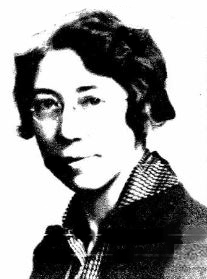
In the years I have been researching our family history, I have used numerous resources to gather information. One resource I have found especially helpful is the book Sheppard-Marshall and Allied Families, written by 3rd cousin Lillian A. Sheppard. Originally from Iowa, she lived for many years in San Jose, California until her death in 1982. Her book is a well researched and extensive collection of Sheppard family members. And it is available online at Ancestry.com at this location. 

As a reminder, many of our ancestors, including Lillian, spelled their name with two p's. Included in Lillian Sheppard's family history are my 4X Great Grandparents James Sheppard (1775-1843) and his wife Hannah Gatchell Sheppard (1784-1839) of Kirkwood, Ohio. I have written about James and Hannah numerous times in The Shepard's Crook. 

An image of Lillian Sheppard
from her book
The 99 Grandchildren. In Lillian Sheppard's family history she records 99 grandchildren of James and Hannah Sheppard. James and Hannah themselves had 13 children, each of whom had large families of their own, averaging nearly 8 children apiece. Hence the 99 grandchildren of James and Hannah. For some reason Lillian was unaware of the 100th grandchild of James and Hannah. That "lost" 100th grandchild is my Great Great Grandfather, Civil War soldier William Sheppard (1835-1862). He is the one from whom our part of the Shepard family is descended. His younger son was William Elmer Sheppard (1862-1915) who took his family to Beaver County, Oklahoma, which is where my Shepard Grandparents met and started their family.

An Understandable Oversight. Now to be fair to cousin Lillian, there are good reasons why her research failed to turn up the 100th Grandchild of James and Hannah. First of all, her research and writing were completed in 1974, long before the Internet came along with its amazing number of genealogical resources. 

Furthermore, William Sheppard, born in 1835, left the Sheppard family homestead in Ohio as a child with his parents and migrated to the wilderness of Indiana. In so doing he evidently lost contact with his grandparents and other family. He grew up in Indiana, served in the military during the Civil War, and died at just 27 years old. Communication was so poor in those days that his war service and his death at a military hospital may not have been known to many in his own family. After William's death in 1862, his widow Mary Sprague Sheppard with their two young sons Frank and William, got on with their lives which did not include William's family of origin.

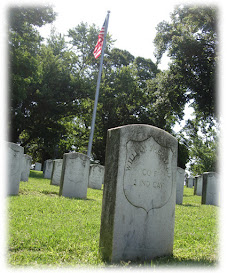
Gravesite of GGGrandfather
William Sheppard in Oak Hill Cemetery
Evansville, Indiana
When I first started researching the soldier William Sheppard some 30 years ago, it was very difficult to find information about him. For several years I thought he had been lost to history and further details of his life would never be found. I knew that his son William Elmer Sheppard was born in Wabash, Indiana, so I visited Wabash and found a few references to him in County history books there. That led me to his grave in Evansville, Indiana where I found a little more information about him. 

Disappointed But Gratified. So it is not surprising that William, the 100th grandchild of James and Hannah Sheppard, could not be found by Lillian Sheppard in her research and was not included in her 857 page book. It leaves me disappointed that Great Great Grandpa William Sheppard, an honorable soldier who gave his life for his country, is missing from this important historical resource.

But it is gratifying to know that telling his story in this blog is one more way of assuring that GG Granddad William will not be lost to history. He now takes his place as one of the many Grandchildren of James and Hannah Sheppard. May his memory be a blessing to all his descendants.

I mentioned that in her research Lillian Sheppard uncovered 99 grandchildren of James and Hannah. In recent years that number has actually grown. In my family tree on Ancestry.com I have now identified from historical records 118 grandchildren of James and Hannah Sheppard, from their first Grandchild Hannah J. Sheppard (1825-1902) to their last Grandchild Etta Blanche Sheppard (1873-1963). Those 118 Grandchildren, with their individual families, would make for one huge family reunion!
- - -
Steve Shepard

Saturday, December 18, 2021

Our Mixed Quaker Heritage

The Quakers, also known as Friends,
are a small group of devout people
who worship in silence,
believing that all
have the Light of God in them.
-Karen Brooks

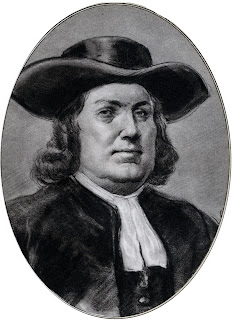
The Quaker religion has had a great impact on our family. They have had an important place in our nation from its beginning and have had a strong impact on our family history as well. My Grandmother Bura Davis Shepard was the Grandchild of Melinda Wright Davis, whose Quaker ancestry reached back over 100 years to the Quaker beginnings in England. Historically the Quakers were pacifists, abolitionists, evangelical, and strict in their Christian beliefs. The following are Quakers from our family tree who illustrate these particular qualities.

An artist's rendering of a
 typical 18th century Quaker
Nathan Bangs Gatchell (1756-1813), my 5th Great Grandfather, was an English immigrant during the time of the Revolutionary War. As a devout Quaker and pacifist, he was not allowed to take up arms against the enemy. But as a patriot he was compelled to help in some way, so he simply cleaned the guns of colonial soldiers during the Revolutionary war. But even that participation in the Revolution was too much for his pacifist Quaker brethren and he was "disowned" as a result.

The Newberry Community. My 7th Great Grandmother Rachel Wells Wright (1720-1771) was an influential Quaker leader from Maryland, who led the effort to spread the Christian faith into the frontier of colonial America. The Quakers always believed in gender equality and were welcoming of women leaders and preachers. Rachel and her family caught the pioneering spirit and gave themselves wholeheartedly to the spread of their Quaker faith and the growth of their new nation.

Rachel was also one of the leaders of the Quaker settlement in Newberry, South Carolina, a bustling community of Quaker activity. South Carolina, however, was a slave state. Being adamantly opposed to slavery, the Quaker community was distraught. Prodded by the abolitionist hell-fire-and-damnation preacher Zachary Dicks, the Quaker community of Newberry struggled with life in South Carolina. At the turn of the 19th century the entire Quaker community abandoned Newberry, South Carolina and settled in Southwest Ohio and other regions. All because of their strong abolitionist stance.

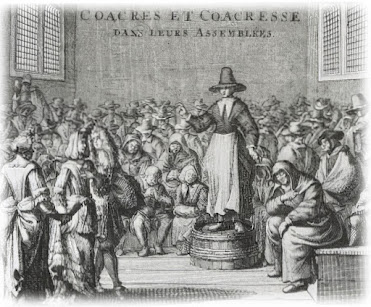
A 19th Century Apostle Paul.  Rachel's daughter Charity Wright Cook (1745-1822) exceeded her mother's accomplishments and became one of the most influential Quaker preachers of the early 19th century. She was a virtual Apostle Paul as she traveled extensively to visit and strengthen Quaker fellowships throughout the new world. Supported by the larger Quaker establishment in Pennsylvania, she even journeyed to Europe to build up the Quaker gatherings there. She was the embodiment of Quaker evangelism and leadership and became one of the best-known colonial Quakers.

Quaker Assembly with a woman preaching
Several books have been written about the remarkable life of our ancestor Charity Wright Cook, including one by the late Quaker scholar Algie Newlin, and another by my 5th cousin Jean Chesley Schubert of Western Washington. Contemporary Quaker writer Barbara Leutke of Seattle is in the process of writing yet another book about Charity Wright Cook. 

The Quakers have had a very positive impact on the history of our family. This is true despite the fact that there was a narrowness about their approach to Christianity. Early Quaker leadership tended to be harsh and overbearing. They strongly believed that Quakers could only marry within their faith. Marrying someone who was not a Quaker was grounds for ouster from their fellowship. That very thing happened to my 3rd Great Grandmother Matilda Reynolds (1814-1876) who was from a respectable Quaker family in Pennsylvania. In 1834 she fell in love and married James Shepard (1813-1887), though he was not a Quaker. As a result young Matilda, at just 20 years old, was booted out of her Quaker fellowship. 

Despite their strictness, the Quakers have contributed in many positive ways to the life of our family over the last 3 centuries. We can be grateful that they have left us a legacy of strong faith, patriotic citizenship and steady engagement with our culture. The most inspiring legacy of our Quaker progenitors is simply the stories of their lives, many of which are found in the posts of The Shepard's Crook.

A note of thanks. I want to say thank you to all of you who are readers of The Shepard's Crook. It is a labor of love that I began writing 14 years ago this month. After 710 posts and over a thousand family pictures I can still say I have enjoyed the research and the work very much. Best wishes to all of you for a joyous Christmas and a wonderful New Year. That greeting even extends to the anonymous troll who continues to play the part of the family grinch! 
- - -
Steve Shepard

Monday, November 01, 2021

Celebrating 97 Years Young

Happy 97th Birthday today to my mother Maida Gower Shepard, the senior member of our family. Maida has lived on Wildwood Lane in Anacortes, Washington for 43 years. She lives with her daughter/care giver Barbara and is supported by Gary and Cindy and other family members and professional care givers.

Maida was born in Mountain View, Arkansas in 1924, the second of the three children of Leroy and Nola Shannon Gower. After growing up in Oklahoma she spent 36 years in San Diego with husband Eugene raising their 6 children. They retired in 1978 and moved to Northwest Washington where they have been ever since. Husband Gene passed away in 2003 but Maida and daughter Barbara have maintained their life there in Anacortes ever since.

Maida Gower Shepard earlier today
with two of her kids Gary and Steve
What is so special about 97?? On the occasion of her 97th birthday, her family celebrates with her and honors her.  Here are the biggest reasons that 97 is so special:

1. If you make it this far, you might as well plan on making it to 100. There's a good chance you'll make it. 

2. At 97 who, among your family and friends is going to complain when you ask for help? They would look foolish to consider themselves put upon.

3. The number 97 is a prime number. It is always good to have the word "prime" describe you. Just like the number 97, there is no one else just like you.

4. At 97 there is at least a 97% chance you are the most respected member of any group.

5. At 97 you can pass gas and no one complains or even gives it a second thought.

6. At 97 you can smugly revel in the knowledge that you are closer to heaven than almost anyone around you.

7. At 97 you know better than anyone how good God has been to you.

8. At 97 you can smile knowing that 97% of those around you will probably never be able to match your age.

9. At 97 you are part of far less than 1% of the American population. 

For all these reasons and so much more, Maida Shepard is a very special person to all her family and friends.On this her birthday we are glad to celebrate with her yet another year of life. May God bless her with many more.
- - -
Steve Shepard

Saturday, October 30, 2021

History Repeating Itself


Happy Halloween!

Happy Halloween to all of you on this spooky scary weekend! May it be a safe and special weekend for all of you!

This article is a follow up to my last post about Elizabeth Maxwell, my 7X Great Grandmother, originally from London, England. At just 18 years old, Elizabeth's mother forced her daughter to break her engagement to the man she loved and wanted to marry. We don't know why her mother felt so strongly against this engagement. We just know that she forced the issue and young Elizabeth did her mother's bidding and broke her engagement. It was devastating to the teen. Over the next few years young Elizabeth recovered from that terrible disappointment and made a good life for herself. My last post told about the amazing events that led to Elizabeth's immigration to Colonial America.

In the New World, in 1725, Elizabeth married a young man named Thomas Job of a respectable Pennsylvania family. Elizabeth and Thomas Job had a large family like most early American families. One of their children was a daughter they named Lydia. Lydia then married and had a daughter named Rachel who in turn had a daughter named Esther who married and had a daughter named Matilda Reynolds. 

Here are these consecutive generations of women in our family:

  • Elizabeth Maxwell (1700-1782) (husband Thomas Job)
  • Lydia Job (1735-1817)  (husband Benjamin Wilson)
  • Rebecca Wilson (1767-1857) (husband Job Sidwell)
  • Esther Sidwell (1791-1874) (husband Richard Reynolds)
  • Matilda Reynolds (1814-1876) (husband James Sheppard)

Marriage Record for Mattie Reynolds
and James Shepherd, April 2, 1833
Choosing the Way of Love. Matilda, the last in this list, had an experience strikingly similar to that of her GG Grandmother Elizabeth. Like her great great grandmother before her, Mattie was not allowed to marry the man she loved and with whom she wanted to spend the rest of her life. A century after Elizabeth's experience history repeated itself. For young Elizabeth from London it was her mother who rejected her daughter's betrothed in 1718 with terrible consequences for the family. For Mattie it was not her mother who objected. It was her Quaker Church leadership. At that time the Quakers did not allow members to marry someone who was not a Quaker. But Mattie, despite being a practicing Quaker, was determined. She chose the way of love over the dictates of her Church and married her betrothed in 1833, a young man named James Sheppard (see the record above of their marriage). As a result in 1834 Mattie was disowned by her religious leaders for marrying outside the Quaker faith.

Elizabeth and her great granddaughter Matilda -- 100 years apart -- experienced a similar disappointment. Authority figures in their respective lives disapproved of the men they each chose to marry. In one case an overbearing mother stepped in to break up an engagement. In the other it was the church leaders who stepped in and punished the young bride for marrying the love of her life.

For at least 100 years -- going back to about 1700 -- this family line of descendants included dedicated Quakers. But with the one act of disownment in 1834, that all changed. 

A Typical Quaker Assembly
in 19th Century America

Our Respectable Quaker Heritage. But let's be clear. The Quakers were respectable people who helped create a great foundation for our country and our family both morally and spiritually. Their positive impact on our nation, and on our family's history, cannot be overestimated. Their stance against slavery, their objection to war, their emphasis on strong families, their acceptance of women leaders -- those were all wonderful things. But their strict stance on young people only marrying within the faith was bad policy. 

Descended From Gritty Women. It's great to know that we are descended from strong, principled, gritty women who rolled with the punches that came their way. We are direct descendants of Elizabeth Maxwell and her great granddaughter Mattie Reynolds, both strong women who refused to let unreasonable authority figures have the last word in their lives. They persisted. They took the bad treatment that came their way and did not let it define them. They made the most of life despite difficult circumstances.

Theirs is a family story we need to tell. They were not the only women in our families who were mistreated and given a bum deal. Others have had to endure similar fates and they too must be honored. But these two -- Elizabeth and Mattie -- remain outstanding examples of honorable women who were treated dishonorably, yet they prevailed. And in them we can find hope and promise for the future.
- - -
Steve Shepard
(he/him/his)

Tuesday, October 12, 2021

The Rest of the Story

In my last post I began the inspiring life story of my 7X Great Grandmother Elizabeth Maxwell (1700-1782).  Born in London, she ran away from home at age 18 and sailed from England to Colonial Pennsylvania. The following is a brief summary of the rest of her story.

Available For Purchase. After the difficult weeks-long journey across the Atlantic, Elizabeth's ship made its way through Delaware Bay and then up the Delaware River and arrived at the port of Philadelphia in the fall of 1718. She was just one of numerous immigrants onboard the ship who were made available for purchase as indentured servants. At the Philadelphia dock at the time of her ship's arrival was an established Colonial land owner by the name of Andrew Job (1650-1722). By his attire Elizabeth recognized him as a Quaker. She was acquainted with the Quakers having grown up in London where her family belonged to a Quaker fellowship. Elizabeth knew that, as a Quaker, Andrew Job was likely to be fair and honest and treat her with respect. She encouraged him to select her -- to "purchase her time" was how they described it -- and fortunately he did. The ship's captain was reimbursed for the cost of her passage and Elizabeth became an indentured servant in the Job family of Chester County, Pennsylvania, for a term of 7 years.

Brick Meeting House Cemetery, Maryland
Fast Forward to 1725. After 7 years as a servant, Elizabeth was freed from her obligation. She had become such a respected and appreciated member of the Job household that she received a marriage proposal from Thomas Job, one of the sons of homeowners Andrew and his wife Elizabeth Job. It was a proposal she gladly accepted. Now that young Elizabeth was free, married and happily settled in the new world, she was free to think about her family back home in England. She wrote to her mother and her uncle Daniel in London, explaining where she was and what she was doing. It was the first time she had reconnected with them since leaving England on her intrepid adventure 7 years earlier. 

Reconnected With Family. Uncle Daniel wrote back to Elizabeth with the sad news that her mother had died. He also explained that she had inherited her mother's property, which included some priceless heirloom furniture. Uncle Daniel shipped the furniture across the Atlantic to his niece Elizabeth in Colonial America. She used her inheritance to help set up her own home with her new husband Thomas Job.

Brick Meeting House of Calvert, Maryland
where Elizabeth Maxwell Job worshipped
Elizabeth was one of the first persons in this part of our ancestry to become a Colonial American Quaker when she joined the Job household of East Nottingham, Pennsylvania in 1718. Quaker records show that she was accepted into the Nottingham Monthly Meeting of Quakers in the 1720s. 

Elizabeth Maxwell Job and husband Thomas Job went on to have a family of 12 children in Cecil County, Maryland as they did their part to help populate the new American frontier. They lived much of their lives near the Brick Meeting House of the Quakers in Calvert, Maryland, an historical structure which still stands today. She and husband Thomas, along with many other family, are buried in the Brick Meeting House Cemetery there.

It is with humble gratitude that we remember the life of Elizabeth Maxwell Job, a brave young immigrant from whom we are directly descended. May the fortitude and stamina she displayed in all that she experienced be duplicated in us, and the foundation upon which our lives are built. She is one more reminder that we carry within us the genes of greatness. 
- - -
Steve Shepard
(he/him/his)

Wednesday, October 06, 2021

Runaway Immigrant: Elizabeth Maxwell

One of the most inspiring stories in our entire family tree concerns our 7th Great Grandmother, English Immigrant Elizabeth Maxwell (1700-1782). Hers is a story filled with great emotion, the challenges of immigration, and overcoming incredible hardships. Her story has all the elements of an epic tale: heartbreak, romance, adventure, danger, family conflict, courage, even religious affection. We are fortunate to have so many details of her life and adventures from three centuries ago. As direct descendants of hers, we carry within us her DNA.

A 12 Generation Lineage. Here is a 12 generation lineage from Elizabeth Maxwell

  • Elizabeth Maxwell (1700-1782)...
  • Lydia Job (1735-1817)...
  • Rebecca Wilson (1767-1857)...
  • Esther Sidwell (1791-1874)...
  • Matilda Reynolds (1814-1876)...
  • Pvt. William Shepard (1835-1862)...
  • William Elmer Shepard (1862-1915)...
  • William Shepard (1888-1976)...
  • Eugene Shepard (1921-2003)...
  • Steve Shepard (b. 1948)...
  • Nathan Shepard (b. 1977)...
  • William Shepard (b. 2012)...

Uncle Daniel Defoe (1660-1731)
Author of Robinson Crusoe
(uncredited Wikipedia image)
Born in London, England at the turn of the 18th century, Elizabeth Maxwell was raised by her mother Elizabeth DeFoe Maxwell (1659-1725). Her mother was widowed in 1705 when Elizabeth was just 5 years old. One can only imagine how hard it was being a single mother in 18th century London. Fortunately mother and daughter were supported to a great extent by young Elizabeth's uncle Daniel Defoe. You may recognize that name. Daniel Defoe (1660-1731) was a renowned British writer. He is best known as the author of Robinson Crusoe, one of the most famous novels of all time. Uncle Daniel was a trader, a journalist, a pamphleteer, and even a spy. He was also an outspoken critic of the British government which got him into trouble. On occasion he had to go into hiding in the home of his sister Elizabeth Maxwell and her daughter young Elizabeth.

Embarassed, Angry and Alienated. When young Elizabeth Maxwell was just 18 years old she fell in love and became engaged to a young Londoner with whom she planned to immigrate to America. Her mother however disapproved of the young man and their plans, and forced the breaking of their engagement. It left the teen Elizabeth embarrassed, angry and alienated from her family and friends. Even uncle Daniel was unable to help. But Elizabeth was not deterred. Her mother was able to break Elizabeth's engagement, but she did not break her spirit. The strong willed teen immigrated by herself to the New World. Whether it was out of spite, or because of a broken heart, we will never know. 

Without notifying her mother or her uncle, the defiant young Elizabeth went to the London docks and made arrangements with a ship's Captain to get passage across the Atlantic on his ship. Upon arrival in the new world she would be sold as an indentured servant, with the proceeds going to the Captain as reimbursement. Indentured servants were not slaves. They were free citizens who were given free passage across the ocean or in some other way were paid in return for a commitment to work for a period of time. Many others on the ship had secured passage in the same manner. It was a very common arrangement. As a matter of historical fact, over half of all European immigrants to Colonial America at that time came as indentured servants.

An 18th Century Sailing Ship
much like the one on which Elizabeth sailed
(image by Regan Walker)
The Fall Out Back Home. Back in London her mother Elizabeth and her uncle Daniel were understandably shaken when they discovered she had immigrated on her own to Colonial America. Some historians note that Daniel Defoe published his famous novel Robinson Crusoe in 1719, the year after his niece Elizabeth ran away to the new world. Could it have been his dismay at his beloved niece's dangerous ocean voyage that inspired him to write his ship-wreck story of Robinson Crusoe? One can only wonder. 

The trip across the Atlantic on a rather small sailing vessel was the way 18th century immigrants made it to the new world. The journey took several weeks and was very dangerous. Sickness was prevalent. Water became tainted and in short supply. The weather could become treacherous. Food became scarce. Many became seriously ill. Deaths were not uncommon among transatlantic passengers. Despite all the dangers and misery, thousands of immigrants made it in this manner to the new world, to Philadelphia or other ports on the Atlantic seaboard.

It was an amazing life journey to this point for young Elizabeth Maxwell. She was still just 18 years old when she arrived in Colonial America in the fall of 1718. She was safe and sound but alone and uncertain about what would happen to her. She stepped off the ship and had her first look at the new world that lay before her. 

In my next post I will share more about the inspiring life of our 7X Great Grandmother and brave English Immigrant Elizabeth Maxwell.
- - -
Steve Shepard (he/him/his)

Wednesday, September 29, 2021

A 100th Anniversary

100 years ago today my Grandparents Nola Shannon and Leroy Gower were married in Stone County in Northern Arkansas. He was just 22; she was only 18. Both of them were from families rooted in Stone County for several generations. 

Leroy and Nola Shannon Gower
Arkansas, 1921
Rooted In Stone County. The Gowers had been in Mountain View, Arkansas ever since Leroy's Great Grandparents, Jackson and Mary Gower came to Mountain View from Tishomingo County, Mississippi in the early 1850s. Young Jackson and Mary started their family in Stone County in 1854 when their first child, Leroy Gower, was born. This Leroy Gower was not my grandfather. Instead he was the grandfather of my grandfather Leroy Ertin Gower (1899-1974). 

The Shannons on the other hand had not been in Stone County, Arkansas quite as long. My Grandmother Nola Shannon was the daughter of Samuel Pickens Shannon who was just a child in Southern Louisiana when the Civil War broke out in 1862. Sam's father David Reid Shannon had entered the war in Louisiana but did not survive it. As a result young Sam Shannon and his siblings were taken to Arkansas in 1867, as soon as it was safe to travel after the Civil War. They were taken to Arkansas to live with Shannon relatives. So when my grandparents Leroy and Nola were married in 1921, their roots had grown deep in Stone County. The Gowers had been there for 70 years, the Shannons had been there for over 60 years. 

Leroy and Nola Shannon Gower
on their 50th wedding anniversary
September, 1971, San Diego
A Fall Wedding. We know very little about the wedding itself. We do know it took place on Thursday, September 29, 1921 in Stone County, Arkansas. They were devout Baptists so they may have had a wedding in their local Church, but we have no record of that. We do have an old picture of Nola and Leroy that may very well have been taken on their wedding day (see black and white photo above). If any of you recognize this photo and know exactly when or where it was taken please let me know.

Their Descendants Today. To Nola and Leroy 3 children were born: Hendrix, Maida and Vicki. Over the last 100 years the family of Leroy and Nola has grown to include a total of 53 direct descendants. From that union that was formed exactly a century ago, a great clan has resulted. If you add in all those folks who have married into their family, their present day clan would number close to 100. It includes family in Western Washington, Northern and Southern California, Arizona, Texas, and even Indiana and Florida. 

The oldest surviving descendant is their daughter Maida Gower Shepard of Anacortes, Washington, who will celebrate her 97th birthday on November 1. Their youngest descendant is their GGG Grandson Gunnar Bass who was born in June of this year, in Weatherford, Texas. He is the son of Lyndsey Aqua and David Bass.

On this 100th anniversary of their wedding, I honor these two, Leroy and Nola Shannon Gower, whose good lives have impacted all of us in innumerable ways. I am thankful for them and for the legacy that they left which continues to this day.
- - -
Steve Shepard